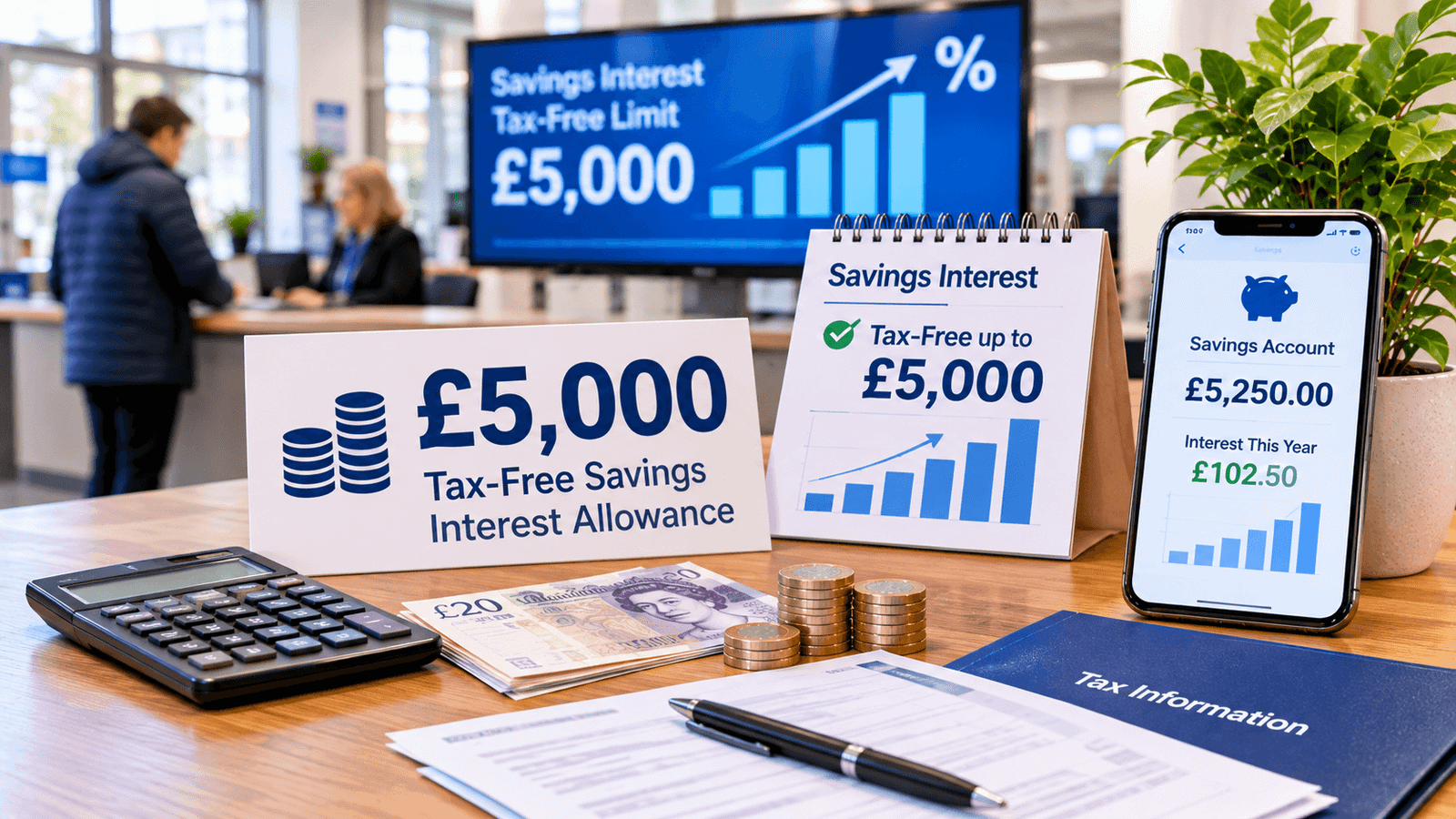
HMRC has reminded savers that some people can earn up to £5,000 in savings interest without paying Income Tax, but the allowance is not available to everyone.
The £5,000 figure relates to the starting rate for savings. It applies where a person’s other taxable income is below £17,570. As other income rises, the amount of tax-free savings interest available under this rule falls.
Who Could Benefit?
People with lower wages or pension income may be able to use the starting rate for savings.
For example, if your other income is below the relevant threshold, you could potentially receive savings interest without paying tax under the starting-rate rules.
However, the £5,000 figure does not mean you can have £5,000 sitting in a bank account tax-free. It refers to the amount of interest earned, not the amount saved.
There is also a separate Personal Savings Allowance. Basic-rate taxpayers can usually receive up to £1,000 of interest tax-free, while higher-rate taxpayers generally have a £500 allowance. Additional-rate taxpayers do not receive a Personal Savings Allowance.
What Happens If You Earn Too Much Interest?
If your savings interest goes above the applicable allowance, the excess can be subject to Income Tax.
For people who are employed or receive a pension, HMRC can normally collect tax due by adjusting their tax code. Banks and building societies provide HMRC with information about interest earned.
HMRC has also warned customers not to ignore Simple Assessment letters. These can be issued where tax, including tax on savings interest, cannot be collected automatically.
What Savers Should Check
Anyone with substantial savings should check how much interest their accounts are generating and whether their income puts them within the relevant tax-free allowance.
The key point is that £5,000 is not a new bank-account limit or a savings cap. It is a potential tax-free allowance for savings interest for people who meet the conditions.