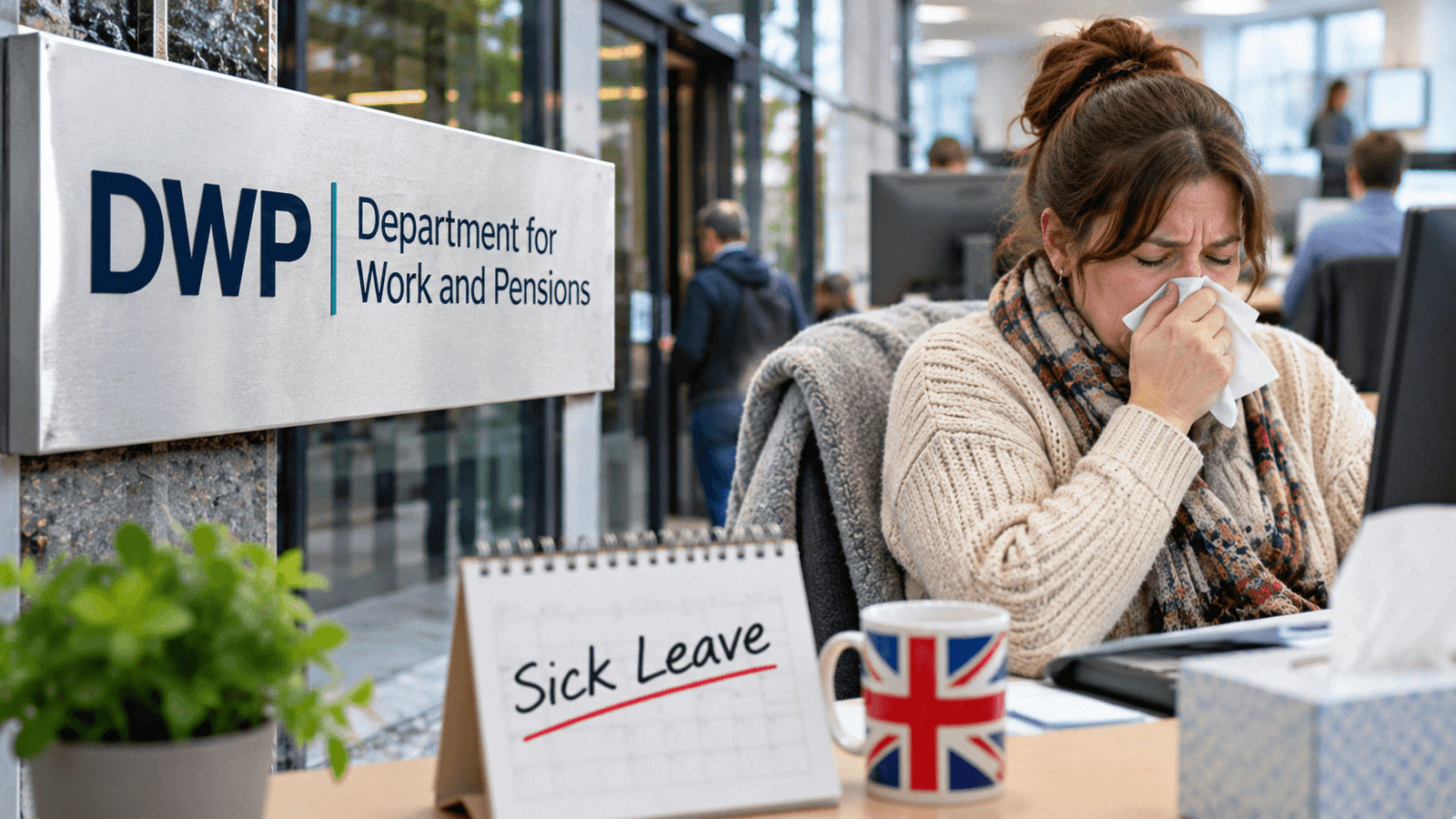
New figures have raised questions about sickness absence at the Department for Work and Pensions (DWP), after employees reportedly took an average of 10 sick days per person during 2025/26.
That compares with 3.8 days among private-sector workers in figures reported by The Telegraph. The findings have attracted attention because the DWP is responsible for administering benefits, supporting jobseekers and helping people return to employment.
However, the figures also highlight an important issue: mental health is responsible for a significant proportion of staff sickness absence.
DWP Employees Took Around 10 Sick Days
Figures obtained through Freedom of Information requests and reported on 26 November 2026 show that DWP employees took approximately 10 sick days per person last year.
The department also recorded almost 2.3 million working days lost to sickness over three years.
Mental health conditions, including stress, anxiety and depression, accounted for almost 40% of DWP sickness absence in the latest figures.
The figures have prompted questions about staff productivity and whether prolonged absences could place additional pressure on government services.
How Does This Compare With Private-Sector Workers?
The reported comparison is:
| Workforce | Average sick days |
|---|---|
| DWP employees | 10 days |
| Private-sector workers | 3.8 days |
However, separate Office for National Statistics figures provide a broader comparison.
The ONS reported that UK workers lost an average of 4.4 working days to sickness or injury in 2025. Its sickness absence rate was 2.9% in the public sector, compared with 1.7% in the private sector.
These measurements are not identical, so the figures should not be treated as a direct like-for-like comparison.
Mental Health Is a Major Reason for Absence
The latest Civil Service sickness absence report, published on 26 November 2026, identified mental ill-health as the leading cause of long-term sickness absence.
It accounted for 48.6% of long-term sickness absence across the Civil Service during 2025/26.
The report also recorded an average of 8.5 working days lost per staff year across the Civil Service.
This suggests that workplace wellbeing and mental health support remain important issues across government departments.
What Has the Government Said?
A Government spokesperson said the latest ONS figures showed Civil Service sickness absence rates were broadly in line with the private sector.
Departments also have policies and support arrangements intended to help employees remain at work and return following illness.
The comparison has nevertheless renewed debate about how government departments manage staff absence and maintain public services.
Could This Affect Pensioners and Benefit Claimants?
The DWP handles millions of benefit claims, pension enquiries and other essential services.
High staff absence can create additional pressure on teams, but the figures do not establish that individual benefit delays have been caused by sickness absence.
Claimants should continue using official DWP contact channels if they need help with payments, applications or outstanding enquiries.
The key point: DWP employees reportedly averaged 10 sick days per person, while private-sector workers averaged 3.8 days in the reported comparison. However, differences in measurement and the significant role of mental health should be considered before drawing conclusions about staff productivity.