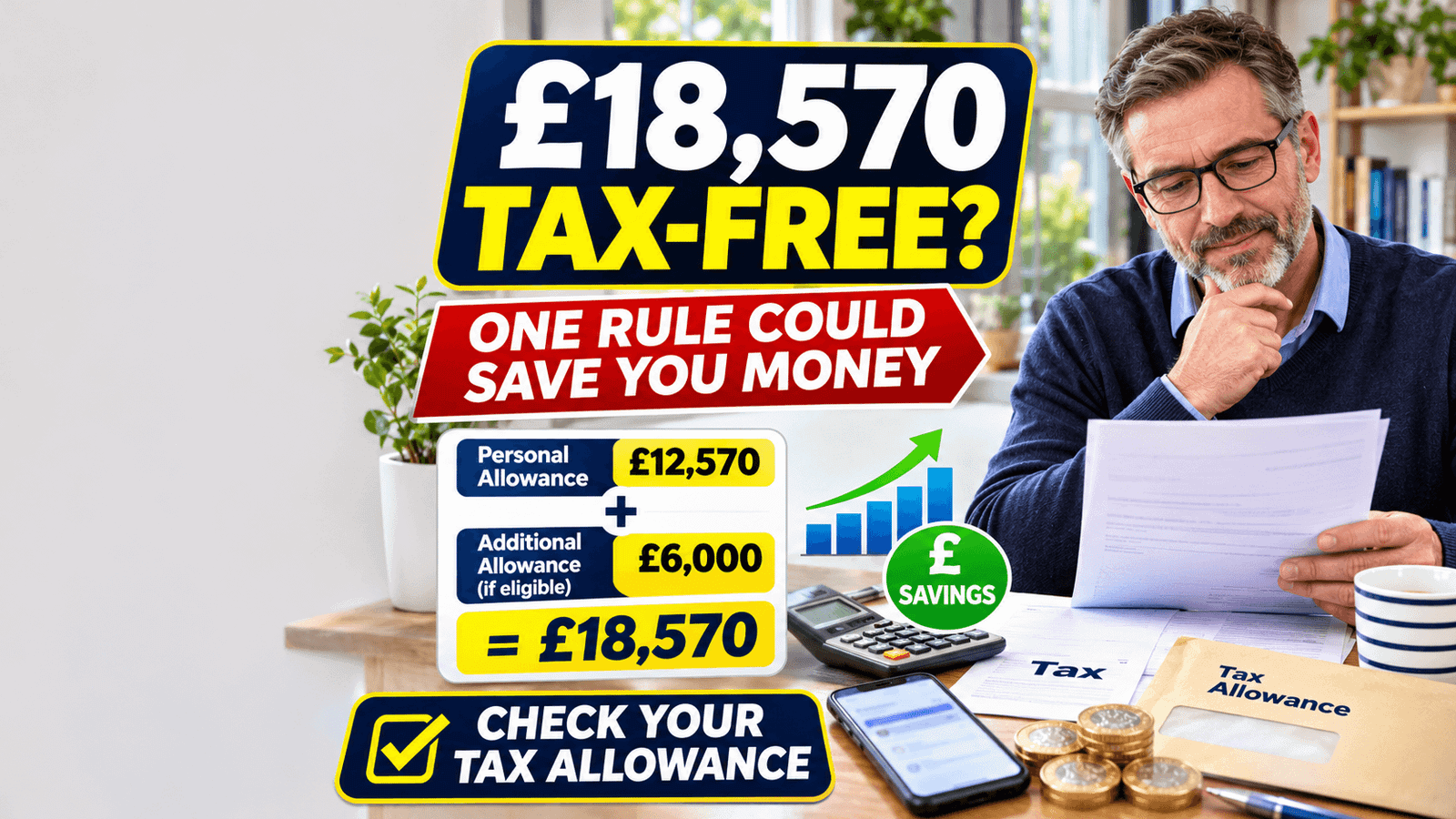
UK savers could potentially benefit from tax allowances worth up to £18,570 when their Personal Allowance and savings starting-rate allowance are considered together.
However, this does not mean everyone can earn £18,570 completely tax-free.
The standard Personal Allowance is currently £12,570, meaning most people can earn this amount before paying Income Tax, subject to the normal rules.
How the £5,000 Savings Rule Works
The important rule for savers is the starting rate for savings.
If your other taxable income is below £17,570, you may be entitled to a starting rate of 0% on up to £5,000 of savings interest.
But there is a catch. Every £1 of other income above the £12,570 Personal Allowance reduces the £5,000 starting-rate allowance by £1.
For example, someone with £14,000 of non-savings income would have £1,430 above the Personal Allowance. Their starting-rate savings allowance would therefore fall from £5,000 to £3,570.
Personal Savings Allowance
There is another allowance that could help.
Basic-rate taxpayers can generally earn up to £1,000 of savings interest tax-free, while higher-rate taxpayers can receive up to £500. Additional-rate taxpayers do not receive a Personal Savings Allowance.
Check Your Savings Interest
The key rule is that the £18,570 figure is not a universal tax-free income limit. It combines separate allowances that apply differently depending on your earnings and savings interest.
Anyone with savings should check their total income, interest earned and tax band to understand whether they owe tax.
With savings rates and tax rules changing over time, checking your position through HMRC can help you avoid paying more tax than necessary.