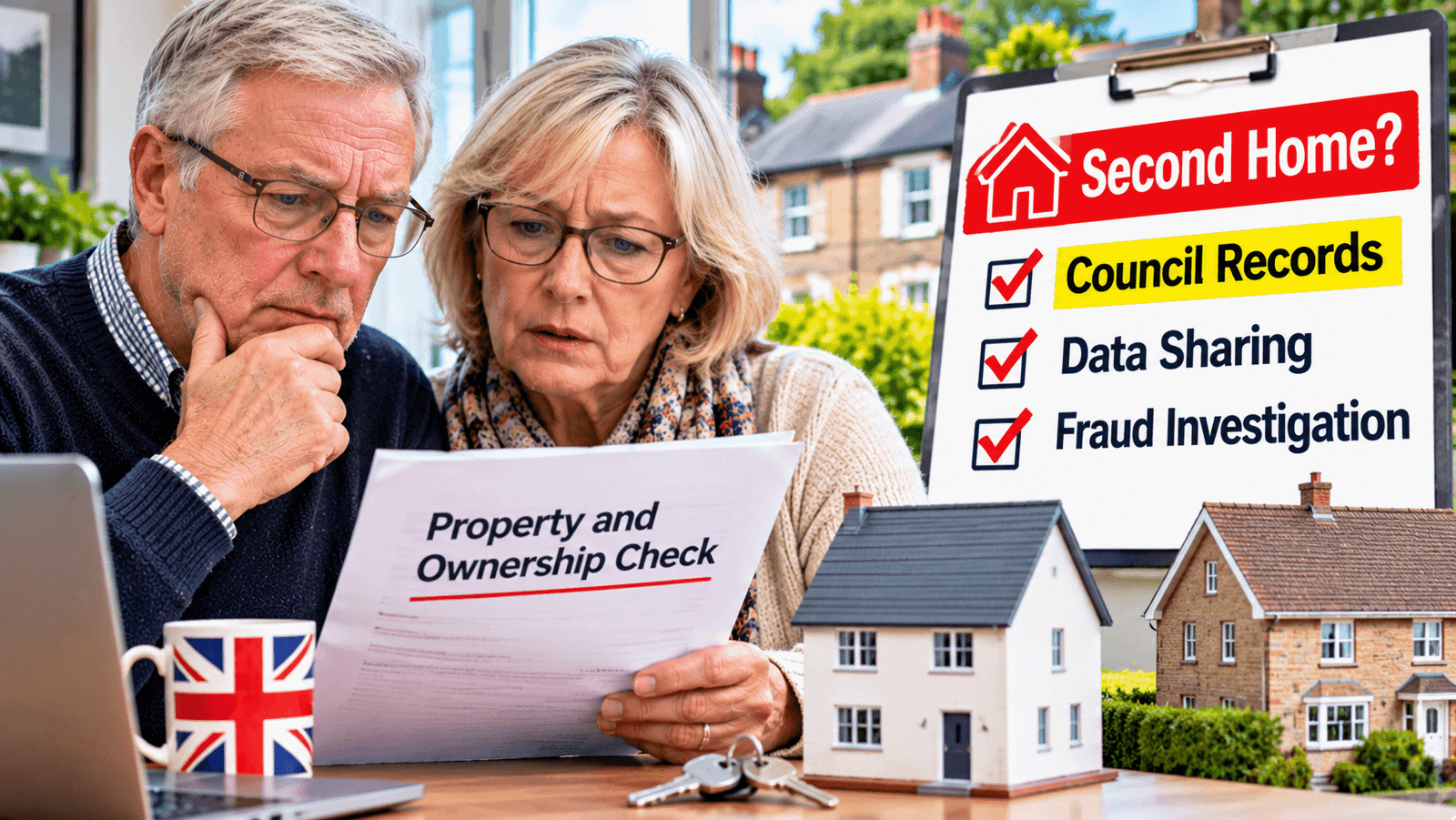
Owning a second property in the UK does not automatically mean you are suspected of fraud. However, councils have powers to use and share certain information to investigate suspected fraud involving council tax, benefits and other public services. The important question is what information can be shared, with whom, and under what legal safeguards.
What is the new council data-sharing scheme?
The latest development involves the Government’s National Fraud Initiative (NFI), which is working with local authorities to identify possible council tax fraud linked to second homes and empty properties.
A voluntary pilot is planned for 2027. Participating councils will be able to share relevant information for data matching, helping investigators identify cases where property ownership, residency or council tax declarations may not match. The initiative follows earlier work between the NFI and councils to understand risks involving second-home council tax premiums.
The NFI is now part of the Department for Work and Pensions (DWP), following a government departmental transfer in July 2026.
What information could be checked?
Reports about the pilot say information may include names, dates of birth, contact details and financial information, with data matching involving credit reference agencies. The purpose is to help build a clearer picture of property ownership and whether a home is genuinely being used as declared.
The Government’s wider NFI privacy notice explains that data matching is automated, but a match is not proof of fraud. It may simply highlight an inconsistency that needs a human investigation.
Could owning a second home get you into trouble?
No. Simply owning a second property does not mean you have broken any rules or will automatically be investigated.
In England, councils can charge up to 100% extra council tax on qualifying second homes, but the decision to introduce the premium and the rate charged are matters for individual councils. A second home is generally a furnished property that is not anyone’s sole or main residence.
Properties occupied as someone else’s main home, including qualifying rented properties, are not treated as second homes for this premium.
Will everyone’s details be investigated?
No. The NFI says its matching process identifies potential inconsistencies rather than making automatic fraud decisions. If information produces a match, the relevant authority must review it and investigate before deciding whether any action is necessary.
The Government also says that data matching is carried out under statutory powers in the Local Audit and Accountability Act 2014. Individual consent is not required where the legal conditions for this processing are met.
What should second-home owners do?
Property owners can take a few practical steps to avoid unnecessary problems:
- Make sure their council tax account contains accurate ownership and contact details.
- Check whether their council applies a second-home premium and what rate it charges.
- Tell the council if the property’s use changes, for example if it becomes someone’s main residence or is let to tenants.
- Keep relevant documents, such as tenancy agreements and council tax correspondence.
- Contact the council if they receive a query or believe information about their property is incorrect.
Owners should also check whether an exception applies. Government guidance lists several circumstances in which a property may be excluded from the second-home premium.
The key point for homeowners
The proposed data-sharing pilot is intended to help councils and fraud investigators identify possible council tax evasion involving second homes and empty properties. It does not mean every second-home owner is suspected of wrongdoing.
For people who declare their property arrangements correctly and pay the council tax they owe, the main advice is to keep records accurate and respond to any official enquiries. A data match alone is not a finding of fraud.
Note: The council tax premium rules described above apply to England. Council tax arrangements differ across Scotland, Wales and Northern Ireland.