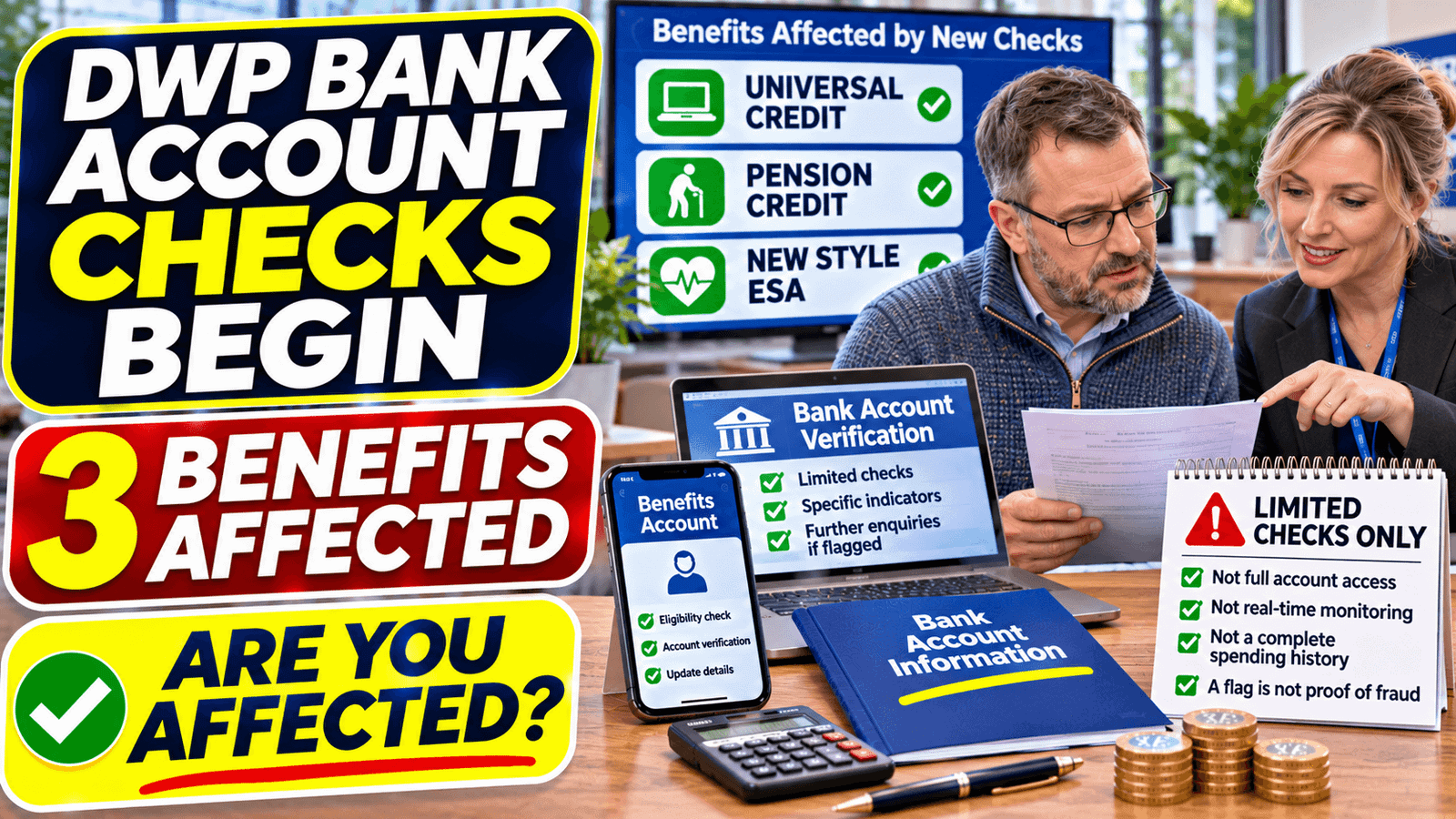
Millions of people claiming benefits could be affected by new Department for Work and Pensions (DWP) rules allowing banks to share limited account information to help check benefit eligibility.
The new system, known as the Eligibility Verification Measure (EVM), has started moving into operation following the first notice issued to financial institutions in October 2026.
However, the changes do not mean the DWP can freely access everyone’s bank accounts or monitor everyday spending. The rules have specific limits, and only three benefits are currently covered.
Which three benefits are affected?
The new bank-checking powers currently apply to people receiving:
- Universal Credit
- Pension Credit
- Employment and Support Allowance (ESA)
The State Pension is explicitly excluded from these powers. Personal Independence Payment (PIP) is also not currently included.
The system is designed to identify possible problems involving undeclared savings, capital limits and extended periods spent abroad where these could affect benefit entitlement.
What information can banks share?
Under the new rules, banks and other financial institutions may be required to check accounts receiving relevant benefit payments against specific eligibility indicators.
If an account meets those indicators, limited information can be shared with the DWP. This may include:
- Names of account holders
- Account numbers and sort codes
- Details of relevant linked or joint accounts
- Information about how much money is held in relevant accounts
- Certain information about transactions made abroad, such as their dates
Importantly, banks cannot share full bank statements, ordinary transaction histories or details of everyday spending through this measure.
The DWP also cannot simply log into someone’s online banking or watch their account in real time.
Could your savings affect your benefits?
For Universal Credit, people with capital above £16,000 are generally not eligible, although certain exceptions apply. Savings between £6,000 and £16,000 can reduce the amount received.
Pension Credit has different rules, and savings can affect the amount awarded. ESA entitlement also depends on the type of claim and applicable rules.
Having savings or a linked account does not automatically mean someone has broken the rules. The DWP must consider the relevant circumstances before making a decision.
Will benefits be stopped automatically?
No. A bank flag is not proof of fraud and does not automatically stop a payment.
If information suggests a possible eligibility problem, the DWP may contact the claimant through their Universal Credit journal, by phone, letter or text message. It may request further evidence or ask questions about their circumstances.
A trained DWP decision-maker remains responsible for decisions affecting benefit entitlement. Claimants who disagree with a decision can request a mandatory reconsideration.
What should claimants do now?
People receiving Universal Credit, Pension Credit or ESA should make sure their savings, income and personal circumstances are reported accurately.
If you are unsure whether a change affects your entitlement, contact the department responsible for your benefit and ask for clarification.
The new checks are intended to identify incorrect payments, not automatically penalise everyone receiving support. Understanding the rules and keeping your claim information up to date can help prevent avoidable problems.