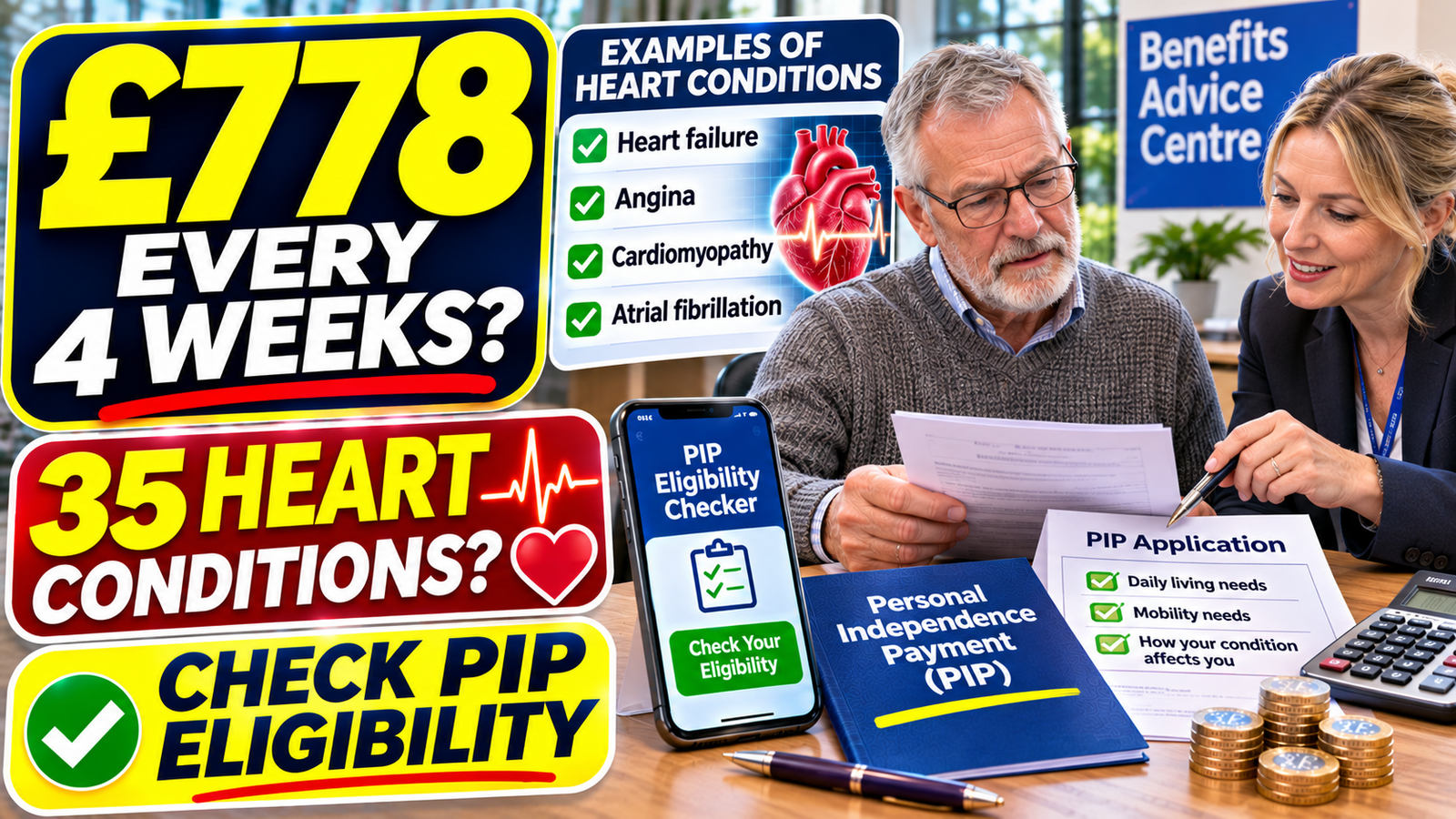
People living with certain heart and circulatory conditions could qualify for Personal Independence Payment (PIP), with eligible claimants potentially receiving hundreds of pounds in disability support.
The Department for Work and Pensions (DWP) records a range of cardiovascular conditions in its PIP statistics. These include heart failure, angina, cardiomyopathy and problems affecting the heart’s rhythm and valves.
However, having one of these diagnoses does not automatically mean someone will receive PIP. The benefit is awarded according to how a person’s condition affects their everyday activities and ability to get around.
The 35 heart and circulatory conditions
The following conditions appear in the DWP’s cardiovascular classifications:
- Cardiac failure (heart failure)
- Cardiomyopathy
- Heart transplantation
- Pericarditis
- Myocardial infarction (heart attack)
- Angina
- Ischaemic heart disease
- Hypertension (high blood pressure)
- Atrial fibrillation or flutter
- Tachycardia
- Bradycardia
- Heart block
- Cardiac arrhythmia with a pacemaker or implantable defibrillator
- Other cardiac arrhythmias
- Aortic valve disease
- Mitral valve disease
- Pulmonary valve disease
- Tricuspid valve disease
- Atrial septal defect (ASD)
- Ventricular septal defect (VSD)
- Coarctation of the aorta
- Tetralogy of Fallot
- Patent ductus arteriosus (PDA)
- Other congenital heart disease
- Other congenital malformations of the heart
- Aortic aneurysm
- Cerebral aneurysm
- Other aneurysms
- Deep vein thrombosis (DVT)
- Raynaud’s disease or phenomenon
- Atherosclerosis (peripheral vascular disease or claudication)
- Buerger’s disease
- Other arterial disease excluding coronary disease
- Other peripheral venous disease
- Other or unspecified cardiovascular disease
How much could you receive?
For 2026/27, the enhanced daily living rate is £114.60 a week, while the enhanced mobility rate is £80 a week.
Someone qualifying for both enhanced components could receive £194.60 a week, equivalent to £778.40 every four weeks. This is not a standard monthly payment, and not everyone will qualify for both components.
PIP is normally paid every four weeks and is not means-tested, so savings and income do not affect the award.
What does the DWP assess?
The assessment looks at difficulties with activities such as preparing food, washing, dressing, managing medication and moving around.
For someone with a heart condition, symptoms such as breathlessness, chest pain, dizziness, fatigue or difficulty walking may be relevant. The DWP considers whether tasks can be completed safely, repeatedly, to an acceptable standard and within a reasonable time.
How to support a PIP claim
Applicants should explain how their symptoms affect daily life, rather than relying only on the name of their diagnosis. Medical evidence may include consultant letters, hospital records, medication lists and details of treatment.
PIP is generally available to people aged 16 or over who meet the eligibility rules and are usually below State Pension age when making a new claim. People in Scotland normally apply for Adult Disability Payment instead.
The key point is that a heart condition may support a claim, but the decision depends on its practical impact. Anyone considering applying can read the official guidance at GOV.UK.