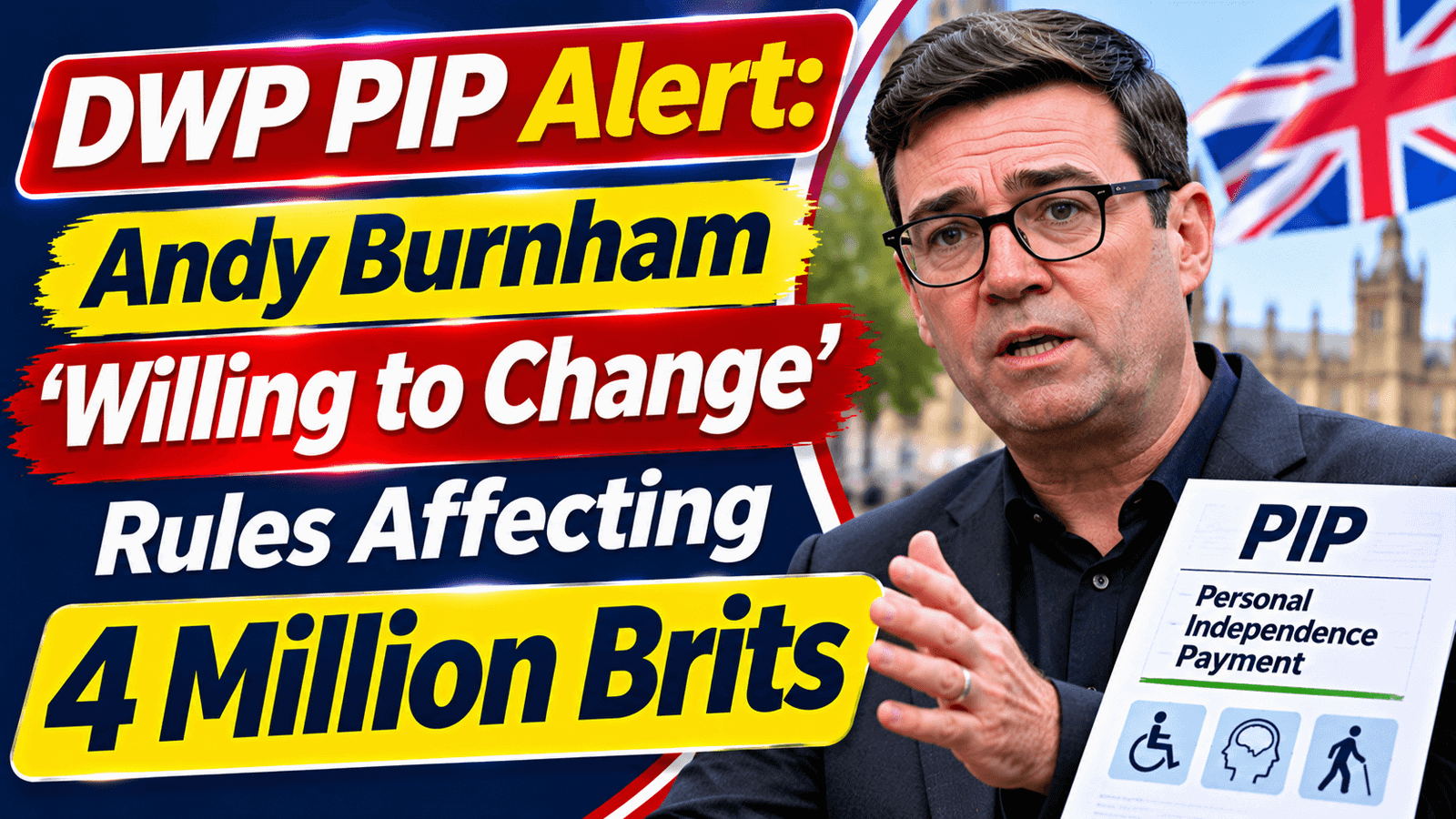
Around four million people receiving Personal Independence Payment (PIP) are waiting to find out how future benefit changes could affect them after Prime Minister Andy Burnham signalled that he is prepared to reform the system.
The announcement comes as the Government considers a major review led by Work and Pensions Minister Sir Stephen Timms. The review says the current PIP system is no longer fit for purpose and needs significant improvements.
For disabled people who depend on PIP to manage everyday expenses, the proposals could make a real difference. However, some changes may also affect how much support individual claimants receive.
Why Is Andy Burnham Considering PIP Changes?
Speaking about the review, Andy Burnham said the Government would not shy away from reforming the welfare system where necessary.
He also confirmed that the Government would consider the Timms review alongside Alan Milburn’s separate review of employment and welfare support.
The aim is to create a system that better supports disabled people while helping those who are able to work access employment opportunities.
PIP currently helps people with long-term physical or mental health conditions meet additional living costs. It is not an unemployment benefit, and claimants can receive it whether they are working or not.
What Changes Has the DWP Review Recommended?
The Timms review, published on 24 November 2026, recommends a more personalised approach to PIP assessments.
Some of its main recommendations include:
- Fast-track assessments: People with serious, well-evidenced conditions could receive support through a quicker process.
- Fewer repeat assessments: People with lifelong or degenerative conditions may no longer need repeated reviews when their needs are unlikely to improve.
- Better assessments: The system should consider how disabilities affect everyday life and the additional costs people face.
- More flexible support: Claimants could have the option of accessing services alongside their cash payments.
The Government has already agreed to take forward the fast-track route and fewer unnecessary reviews for people with lifelong or progressive conditions.
Could Some PIP Claimants Receive Less Money?
This is one of the biggest concerns surrounding the proposed changes.
The review suggests that payments should better reflect the additional costs faced by disabled people.
Co-chair Sharon Brennan has acknowledged that a rebalancing of support could mean some people receive more while others receive less.
However, the review has not announced an immediate reduction in PIP payments or confirmed new eligibility rules. Existing claimants should not assume their payments will automatically change.
When Will the New PIP Rules Begin?
The Government is expected to publish a wider welfare reform White Paper in early 2027 after considering both major reviews.
Any further changes will require detailed decisions, and some may need legislation before they can be introduced.
For now, existing PIP rules remain in place.
What Should PIP Claimants Do Now?
If you currently receive PIP, continue reporting relevant changes in your circumstances and keep copies of medical evidence and supporting documents.
You can check your existing entitlement and official guidance through GOV.UK.
The key message is that PIP reform is being considered, but no general payment cut has been confirmed. Claimants should wait for the Government’s full response before assuming how the proposals will affect their support.