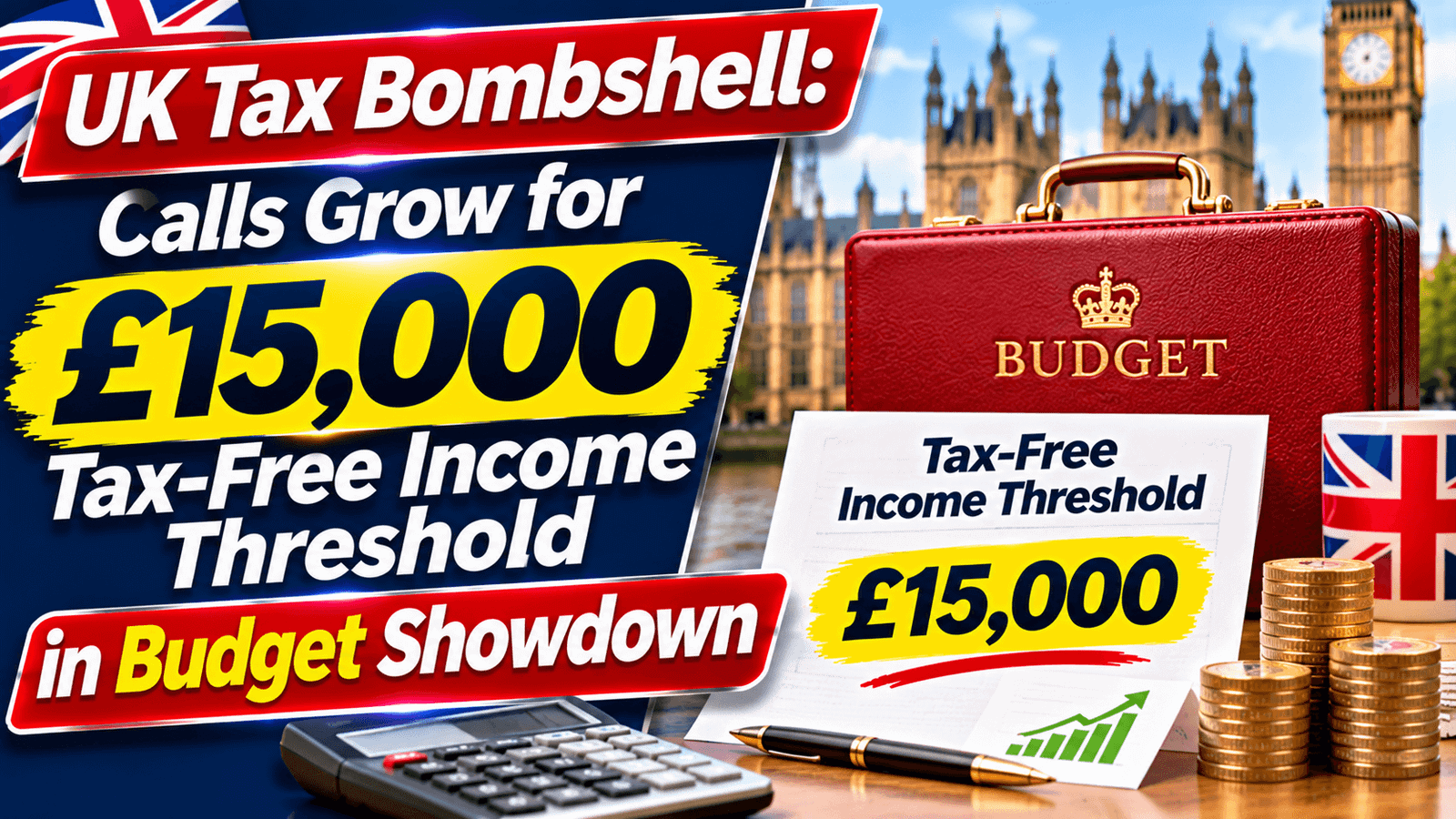
Millions of workers and pensioners could benefit if the Government agrees to increase the UK’s tax-free income threshold from £12,570 to £15,000.
The proposal has returned to the spotlight following renewed pressure from MPs during the debate over the Government’s Finance Bill. Supporters argue that increasing the Personal Allowance could help people struggling with rising living costs and prevent more low-paid workers from being pulled into income tax.
However, there is an important point taxpayers need to understand: the £15,000 threshold is a proposal, not an approved tax change. The Government has not confirmed that it will introduce the increase.
Why Are MPs Calling for a £15,000 Tax Allowance?
The standard Personal Allowance is currently £12,570. This is the amount most people can earn in a tax year before they start paying income tax.
It has remained unchanged since April 2021 and is scheduled to stay frozen until April 2031.
As wages and pensions increase, more people can end up paying income tax or moving into higher tax bands, even when their purchasing power has not improved significantly.
MPs supporting the proposed increase say raising the allowance to £15,000 would give households more room in their budgets.
How Much Could Taxpayers Save?
Under the proposal, the Personal Allowance would gradually increase from £12,570 to £15,000 over five years.
For a basic-rate taxpayer who can use the entire additional allowance, the potential income tax saving would be:
- Current tax-free allowance: £12,570
- Proposed tax-free allowance: £15,000
- Additional tax-free income: £2,430
- Potential annual tax saving: £486
The proposal discussed in Parliament also includes increasing the higher-rate income tax threshold from £50,270 to £56,000 over five years.
Supporters have suggested that the combined changes could put up to £680 back into people’s pockets, depending on their circumstances.
What Is the Government’s Current Position?
The Government has maintained the existing Personal Allowance rather than agreeing to the proposed £15,000 threshold.
Official HMRC figures confirm that the standard allowance remains £12,570 for both 2026/27 and 2027/28.
This means taxpayers should not expect an automatic increase in their take-home pay because of the proposal. Any change would need to be approved and included in future tax legislation.
Could Pensioners Benefit Too?
Yes. The Personal Allowance applies to taxable income from sources including employment and pensions.
Therefore, an increase could also benefit pensioners who pay income tax on their State Pension, private pension or other taxable income.
However, the separate Pension Tax Allowance planned for eligible pensioners from April 2027 is a different measure and should not be confused with the proposed £15,000 Personal Allowance.
What Should Taxpayers Do Now?
For now, people should continue using the existing £12,570 threshold when calculating their income tax.
Keep an eye on announcements from HM Treasury and HMRC, particularly as Parliament considers the Finance Bill.
The main question is whether the Government will reconsider the tax-free allowance in response to growing pressure from MPs. Until an official decision is made, the £15,000 figure remains a proposal rather than a confirmed benefit.